Doors Shut, App Still Open: Designing a Bank Holiday Mode That Doesn't Feel Like a Dead End
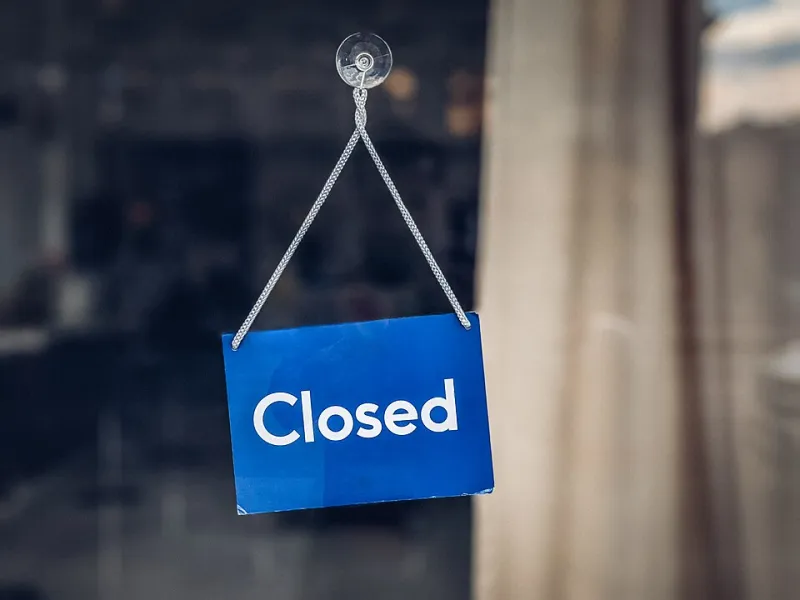
Photo: Ivan Radic, CC BY 2.0, via Wikimedia Commons
There's a particular kind of Monday in the UK where everything looks normal and nothing works. It's the first Monday in May, or the last one in August, and your app is still cheerfully promising a next-day delivery for a parcel that is, in fact, going nowhere until Wednesday.
Nobody is surprised by these dates. They're published years ahead. And yet bank holidays remain one of the most dependable sources of baffled support tickets, one-star reviews and "is this a scam?" emails in the UK app economy.
Bank holidays break apps in the boring places
It's almost never a dramatic crash. It's the small fictions your product tells. "We're open." "Someone will reply shortly." "Arriving today." "Book your slot." On a normal Tuesday those sentences are true. On 31 August 2026 they're just wrong, and users notice faster than you'd think.
The calendar adds a wrinkle too, because the UK doesn't have one bank holiday schedule, it has several. Scotland takes 2 January and St Andrew's Day. Northern Ireland takes St Patrick's Day and the Twelfth. England and Wales carry on with their own list. If you run a single national product with a single set of copy, you've got a decision to make about how granular you want to be.
What a bank holiday mode actually is
Not a shutdown. Think of it as a pre-agreed configuration switch — a set of changes to timing copy, availability labels, notification schedules, slot generation and support routing, triggered by a date rather than by an incident.
The distinction matters. Teams are good at reacting to outages. They're much worse at planning for a day when nothing has gone wrong but the world has quietly stopped answering the phone.
The switch-off list
Before anyone writes a word of copy, work out what should actually change behaviour. A decent starter list:
- Delivery and collection promises. Anything that says "today", "next day" or "within 24 hours" needs to know what day it is.
- Slot generation. Appointment pickers that happily offer a bank holiday Monday for a service that doesn't run on bank holiday Mondays.
- Chat response expectations. "We usually reply in 10 minutes" is a promise, not a decoration.
- Push notifications. Nudges that assume a human will be there to act on the outcome.
- Settlement and payout messaging. If money moves on working days, say so on the screen where people are staring at a pending balance.
- Onboarding steps that require a person. Anything with a manual review, a verification call or a same-day check.
You don't have to switch all of it off. You do have to decide, in advance, which of these sentences would be lies on a given date.
The copy is the product
Most bank holiday failures are writing failures. Someone has to sit down in February and draft the sentences that will appear in August. Four templates cover most of it:
- What's still open right now.
- When normal service resumes, with a date rather than "soon".
- What the user can still do in the meantime.
- Where to go if it's genuinely urgent.
That last one is where teams get squeamish. If you have an out-of-hours route, name it plainly. If you don't, say that too, and point people at the self-serve options instead of leaving them to guess. Vagueness reads as evasion, and evasion is what turns a mild annoyance into a public review.
Designing a closed state that still feels helpful
This is where a lot of good intentions go sideways. The instinct is to grey everything out, slap a banner across the top and call it done. But a closed state is still a screen with a job to do.
Show the next available time, not just the word "closed". A date is reassuring. A grey box is not. "Bookings reopen Tuesday 7 April at 9am" answers the question the user actually arrived with.
Keep the self-serve paths alive. Order history, tracking, saved details, cancellation, password resets. Very little of that needs a human, and losing access to it for 48 hours is what pushes people to email you.
Match the weight to the moment. A full-screen takeover for a slightly delayed dispatch notice is overkill. A status banner that appears exactly where the promise lives is usually enough. Reserve the big treatment for services where the closure genuinely blocks something important.
Get the tone right for the context. A jovial "we're all at the beach!" works for a recipe app. It lands badly on a medication reminder or a payroll tool. Read your closed-state copy out loud and ask whether it sounds like the rest of your product.
Don't forget assistive tech. If you're injecting a banner, announce it properly rather than leaving screen reader users to discover it by accident. And check the contrast on muted, de-emphasised states — a faded grey on near-white is a very common own goal.
The 2026 calendar, as a planning prompt
Use these as a trigger to check your config, not to build a monument to it. England and Wales, for reference: 1 January, 3 April (Good Friday), 6 April (Easter Monday), 4 May, 25 May, 31 August, 25 December, and 28 December as the substitute day for Boxing Day. Scotland adds 2 January and 30 November, and takes its summer holiday on 3 August. Northern Ireland adds 17 March and 13 July, the latter being the substitute for the Twelfth. Always confirm on gov.uk before you ship anything.
Two dates deserve extra attention in 2026. Christmas Day falls on a Friday and Boxing Day on a Saturday, which means a long, oddly shaped run of disrupted working days between 24 December and 4 January. And Easter 2026 puts Good Friday and Easter Monday back to back, so any product with a four-day settlement cycle needs to know about it now.
Store the calendar as data, not as hard-coded strings. One config file, entries tagged by nation, plus a note of who signs it off. That way a copy change next December is a fifteen-minute job rather than a sprint ticket.
Two questions before you ship it
Would a user landing on this screen know exactly what to do next? And will it generate fewer support tickets than saying nothing at all?
If the answer to either is no, you haven't finished. A bank holiday is at least predictable. Your closed state should be too.